
Over the past few months, I've tested quite a few AI image tools. Most of them are good at one thing, such as image generation, editing, or upscaling, but very few combine everything into a single workflow.
Recently, I came across Kimg AI, a platform that brings together multiple AI models for image creation, editing, enhancement, and even image-to-video generation. After spending some time with it, here are my impressions.
What Is Kimg AI?
Kimg AI is an AI-powered creative platform that allows users to generate images from text prompts, edit existing images, upscale visuals to higher resolutions, remove backgrounds, and create videos from images. The platform integrates several popular AI models, including Nano Banana, Nano Banana Pro, Flux, Seedream, and Veo.
Key Features
1. AI Image Generation
Creating images is straightforward. Simply enter a text prompt and choose a model.
The platform supports various styles, including:
Photorealistic portraits
Anime artwork
Product mockups
Concept art
Social media graphics
The generated results are detailed and generally follow prompts well.
2. Advanced Image Editing
One feature I found particularly useful is image editing.
Instead of recreating an image from scratch, users can upload an existing image and make targeted modifications such as:
Replacing backgrounds
Adding or removing objects
Style transformations
Text replacement
Context-aware image editing
Flux, one of the available models, is specifically designed for precise image modifications while preserving the rest of the image.
3. High-Resolution Upscaling
Kimg AI offers image enhancement capabilities up to 4K, 8K, and even 16K resolution through Nano Banana Pro.
This can be useful for:
Marketing materials
Print projects
Product photography
Large-format graphics
The platform focuses on preserving detail while increasing image resolution.
4. Multiple Reference Images
Another interesting feature is support for multiple reference images.
Users can upload up to four reference images to help maintain character consistency, style coherence, and visual continuity across generations. This is especially valuable for creators building recurring characters or brand assets.
5. Image-to-Video Generation
Kimg AI also includes access to Veo-powered image-to-video generation.
This allows users to animate static images and turn them into short cinematic video clips, which can be useful for social media content, marketing campaigns, and creative projects.
Who Is It For?
Kimg AI may be useful for:
Content creators
Bloggers
Digital marketers
Designers
E-commerce sellers
Social media managers
Having image generation, editing, upscaling, and video creation in one platform can simplify the creative workflow. Similar discussions within AI communities often highlight the value of tools that combine multiple stages of the image creation process into a single workspace.
Free Credits for New Users
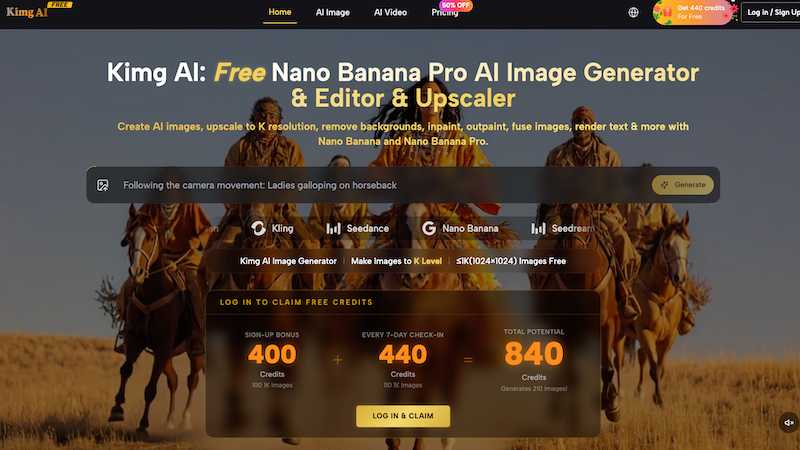
One thing I liked is that new users can start with free credits and additional check-in rewards, making it possible to test the platform before committing to a paid plan. According to the website, users can receive signup bonuses and periodic credit rewards.
Final Thoughts
Kimg AI stands out by combining image generation, editing, upscaling, and image-to-video capabilities in a single platform. Instead of juggling multiple tools, users can manage most of their AI visual workflow from one dashboard.
If you're looking for an AI creative platform that goes beyond simple text-to-image generation, Kimg AI is worth exploring.
Website:
https://kimg.ai/