
The hydraulic infrastructure serves as the operational lifeline of your Kobelco crane. Every boom articulation, every rotational movement of the upper structure, every precise load management function depends entirely on pressurized fluid dynamics. This sophisticated capability remains sustainable only through stringent contamination control. The component achieving this controlthe hydraulic filterdelivers protection disproportionate to its modest physical presence. Yet this vital element routinely appears at the bottom of maintenance priority hierarchies.
Deferring filter service seems manageable initially. Equipment continues functioning without dramatic operational symptoms. Instrumentation displays acceptable performance parameters. But beneath this reassuring operational veneer, progressive deterioration accelerates steadily. Particulate contamination infiltrates precision components without audible or visible indication. When performance degradation finally becomes apparent, extensive internal damage has already occurred. Approaching filter replacement schedules as negotiable recommendations creates substantial financial exposure. Treating them as mandatory protection protocols preserves capital asset value effectively.
The Critical Science of Hydraulic Filtration
Hydraulic fluid performs dual essential functions simultaneously. It transmits substantial mechanical force while maintaining lubrication films between precision-machined moving elements. Operating under extreme pressure conditions, this fluid traverses positive displacement pumps, proportional control valves, and double-acting cylinders manufactured to tolerances measured in thousandths of inches. Even nanoscale particulate matter initiates measurable wear mechanisms. Contamination vectors encompass manufacturing residuals, atmospheric particulate infiltration, polymer seal degradation products, and moisture condensation.
Filtration media serve as the system's primary defensive perimeterintercepting threats before they reach vulnerable internal surfaces. The biological kidney analogy maintains precise validity: continuous purification sustains overall system health and functionality. New filtration elements capture particles according to validated micron ratings. As operating hours accumulate, particulate loading increases progressively. Eventually, capacity thresholds force either bypass valve actuation permitting unfiltered circulation, or flow restriction creating pressure starvation conditions downstream.
Both failure modes generate severe economic consequences. Fluid circumventing effective filtration transforms into precision grinding compound. Individual abrasive particles score pump housings or obstruct critical valve mechanisms. Once initiated, this damage produces additional debris, establishing self-accelerating wear cascades that compound geometrically without timely intervention.
The Deceptive Economics of Convenience-Based Delay
Maintenance postponement appeals during intensive operational periods. Project schedules compress significantly. Equipment utilization reaches maximum capacity. You rationalize brief service extension as acceptable operational risk. But hydraulic contamination progresses relentlessly independent of scheduling convenience. Every service hour with compromised filtration permits additional debris circulation through expensive precision components.
Performance impacts manifest beyond physical wear metrics alone. System responsiveness degrades measurably. Crane operators report lethargic behavior during precision operations. Swing motions exhibit hesitation or positional instability. Load-holding capability deteriorates unexpectedly under working loads. These symptoms frequently trigger expensive diagnostic confusiontechnicians condemn major components when filtration neglect actually originated the performance decline.
Comprehensive hydraulic system troubleshooting consumes substantial technical resources. Sequential replacement of pumps, valves, and actuators may proceed while contaminated fluid continues destroying each new installation. Eventually tracing performance degradation to filter maintenance failures reveals entirely preventable capital expenditure and operational disruption.
Implementing Manufacturer-Validated Procedures
Kobelco engineering establishes maintenance schedules through rigorous laboratory validation, statistical reliability modeling, and extensive fleet observation. Recommended hydraulic filter replacement intervals represent optimized calculations balancing contamination generation rates against filtration media capacity under typical operating conditions.
These specifications provide baseline guidance requiring environmental calibration. Severe operating contextsabrasive atmospheric conditions, thermal cycling, or elevated humidityaccelerate loading substantially. Monitor filter condition indicators continuously. Warning zone readings before scheduled intervals demand immediate replacement action regardless of calendar expectations.
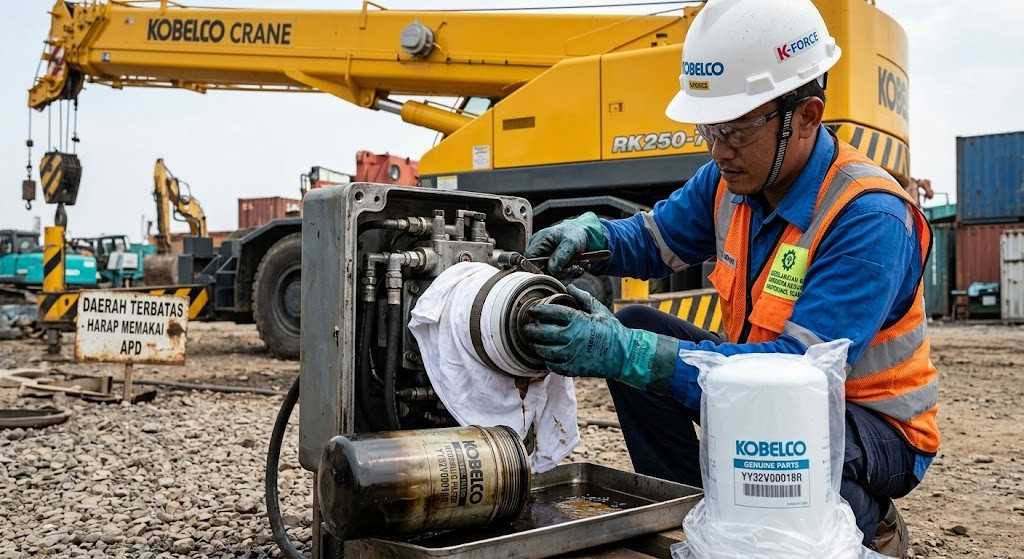
Execute replacement using disciplined technical methodology. Thoroughly decontaminate external housing surfaces before opening to prevent environmental introduction. Employ manufacturer-specified extraction tools. Inspect removed elements microscopically for metallic debris. Bright particulate matter or viscous sludge deposits indicate internal component distress requiring comprehensive investigation.
Install replacement elements using proper hand-starting techniques before final torque application. Adhere precisely to specified tightening values. Excessive torque damages elastomeric seals; insufficient torque permits external leakage paths. Charge systems with specification-compliant hydraulic fluids. Remove entrained air through appropriate bleeding protocols. Operate initially at reduced loads to establish proper fluid distribution patterns. These disciplined procedures require minimal incremental time while preventing costly installation errors.
Engineering Integrity Through Genuine Kobelco Parts
Filtration manufacturing quality varies dramatically across market sources. Micron rating accuracy, bypass valve calibration precision, and seal compound compatibility all critically influence service outcomes. Visually similar aftermarket alternatives frequently harbor specification deviations creating serious operational malfunctions. Incorrectly calibrated bypass valves fail to provide protection when most needed. Incompatible seal elastomers degrade when exposed to specific hydraulic fluid chemistries, becoming additional contamination sources.
Specifying authentic Kobelco parts ensures replacement filters meet exact original equipment engineering specifications. These components undergo comprehensive validation for design pressure, flow velocity, and fluid compatibility requirements. This engineering integrity transcends marketing terminologyit provides quantifiable protection against accelerated wear mechanisms and performance degradation.
Procurement of genuine Kobelco parts includes complete documentation traceability. Manufacturing sources, quality certifications, and performance specifications remain accessible for verification. Should performance anomalies or safety notifications arise, established resolution mechanisms exist. Unbranded or counterfeit alternatives lack this essential accountability infrastructure.
Strategic Crane Parts Supplier Partnership Development
Accurate part identification establishes merely the foundation. Your selected crane parts supplier relationship significantly determines maintenance program effectiveness. Established suppliers contribute technical expertise extending substantially beyond order fulfillment functions. They verify filter selections against specific machine serial numbers and manufacturing configurations. They proactively communicate engineering updates, part number supersessions, and service bulletin information.
Inventory availability and management capabilities separate transactional vendors from strategic partners. Waiting until filter failure before ordering guarantees operational disruption. Professional crane parts supplier operations maintain strategic inventory depth for high-rotation maintenance items or provide expedited procurement pathways. They recognize which components most critically impact equipment availability metrics. Cultivate relationships with technically competent, responsive suppliers who verify technical details before shipment release.
Evaluate consolidated filter kit procurement when multiple hydraulic circuits require simultaneous service. Coordinated replacement maintains consistent protection quality across all system branches. Knowledgeable crane parts supplier consultants identify which filters serve specific functional rolesreturn line filtration, suction straining, or pressure line protectionand recommend appropriate service quantities for comprehensive maintenance.
Robust crane parts supplier partnerships generate ongoing operational advantages. They anticipate your preventive maintenance scheduling requirements. They offer diagnostic consultation when contamination patterns suggest unusual system problems. They function as valuable technical extensions of your maintenance organization rather than simple transactional vendors.
Advanced Warning Signal Recognition and Response
Calendar-based maintenance provides necessary structural foundation, but operational vigilance identifies exceptions requiring immediate intervention. Monitor for these specific indicators suggesting premature filter attention requirements:
- Hydraulic system warning indicator illumination
- Reduced operational responsiveness or power availability
- Abnormal pump operating noise characteristics
- Fluid appearance darkening or opacity development
- Elevated filter housing surface temperatures
Any combination indicates probable flow restriction or bypass condition existence. Never disregard these warning signals. Filter replacement requires substantially less operational downtime than major hydraulic component rebuilding or replacement procedures.
Maintain comprehensive service documentation. Record equipment hour meter readings at each filter service event. Document any operational symptoms observed prior to replacement action. This accumulated historical data enables predictive maintenance optimization and trend identification. Filters exhibiting service life shorter than established historical norms indicate contamination sources requiring investigationpotentially deteriorating reservoir seals, damaged intake plumbing, or inadequate breather filtration systems.
Financial Protection Through Preventive Discipline
Major hydraulic system repairs impose severe economic burdens. Primary pump replacements typically cost thousands of dollars. Associated operational downtime multiplies these direct costs through lost production capacity and schedule impact. Filter replacement investment remains trivial by comparison.
This maintenance category lacks dramatic visibility or recognition. Clean filtration elements attract no special attention. Yet every stakeholder affected by crane operationsequipment operators, site supervisors, project managers, clientsrecognizes and values consistent equipment reliability. They appreciate schedule adherence and operational availability. Such dependability emerges not from extraordinary interventions but from disciplined execution of fundamental maintenance practices.
Review your maintenance planning documentation carefully. Schedule upcoming service intervals proactively. Replace filtration elements before performance degradation occurs. Specify authentic Kobelco parts for guaranteed specification compliance and performance validation. Partner with capable crane parts supplier organizations who understand and support your operational requirements. This systematic methodology protects your capital investment effectively.
Your Kobelco crane incorporates durable engineering design intended for extended service life. Realizing that design potential requires your consistent commitment to fundamental maintenance discipline. Hydraulic filtration maintenance stands among the most critical of these fundamentals. Never underestimate its protective importance. Both equipment longevity and financial performance will validate this maintenance priority consistently.